
Blog
N-able MailAssure: critical SSRF flaw already exploited
What it is and who is affectedN-able MailAssure, the email security platform formerly known as SpamExperts, carries a server-side request forgery (SSR...
What it is and who is affected
N-able MailAssure, the email security platform formerly known as SpamExperts, carries a server-side request forgery (SSRF) vulnerability tracked as CVE-2026-134624. The flaw sits in the LDAP synchronisation connection check that the product performs when a relay is configured: the server does not restrict where that check may connect.
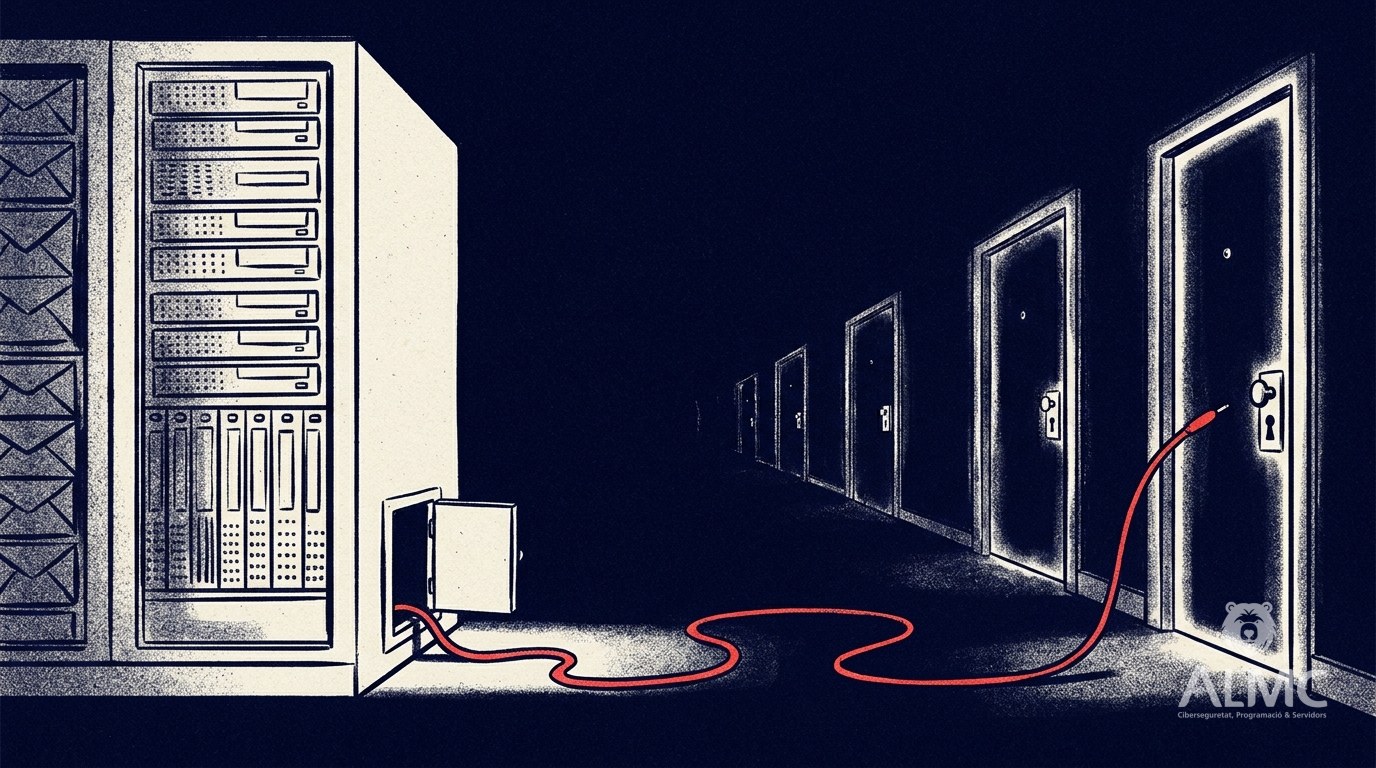
According to the National Vulnerability Database (NVD) of the NIST, all versions before 20261121.1943 are affected. The problem is classified as CWE-918 and rated CVSS 4.0 9.3, critical. The attack vector is network-based and requires the attacker to hold an authenticated API account (PR:H), but once inside, an authenticated API user can make the server connect to arbitrary internal hosts and ports, map which of them are reachable and send crafted data to internal services.
In practice this turns a mail hygiene appliance into a pivot point. A compromised or low-privilege API account becomes a way to probe the internal network from a machine that usually sits at the edge, trusted by the rest of the infrastructure. Small and mid-sized businesses in Spain that run MailAssure themselves, or that rely on it through a managed email setup, should treat this as a priority item.
Why it is urgent
This is not a theoretical finding. CISA added CVE-2026-134624 to its Known Exploited Vulnerabilities (KEV) catalogue on 23 November 2026, which means it has been observed in real attacks. CISA gave US federal agencies until 26 November 2026 to apply the mitigations described in the vendor's instructions, in line with its BOD 26-04 guidance on prioritising security updates by risk, including its forensics triage requirements.
The same guidance tells asset owners to assess each system's exposure to the internet and, where no mitigation is available, to stop using the product. There is no indication in the available data that this vulnerability has been used in ransomware campaigns, but the KEV listing alone justifies acting now rather than waiting for the next maintenance window. NVD published the entry on 22 November 2026.
What to do today
- Confirm whether you use it. Check whether MailAssure or SpamExperts is deployed on your own infrastructure or as part of a hosted mail filtering service, and identify the exact version in use.
- Apply the vendor's fix. Consult the official N-able security advisory and apply the update or mitigation it specifies; the advisory is the only authoritative source for the corrected build and for any interim workaround.
- Review API accounts. Because exploitation requires an authenticated API user, audit every API credential, revoke those that are unused or shared, and rotate the rest.
- Look for signs of intrusion. Examine logs for unexpected outbound connections from the MailAssure host to internal addresses and ports, and for unusual LDAP synchronisation activity or relay configuration changes.
- Reduce what is exposed. Restrict management and API interfaces to known addresses, keep the appliance off unrestricted internet paths where possible, and segment it from critical internal systems.
How a cybersecurity team like ALMC's can help
Patching an edge appliance is only part of the job. The harder questions are whether the flaw was already used against you and how far an attacker could have moved from there. At ALMC we work with SMEs, online shops and companies across Lleida, Barcelona, Tarragona and Girona that run their own servers or keep a small IT team, and this is exactly the kind of situation we deal with.
Our work starts with a security audit and pentesting to find the vulnerabilities that matter before someone else does, followed by hardening of servers and the applications on them, including WordPress, PrestaShop and Joomla. We set up monitoring and incident response so that suspicious connections and configuration changes are caught early, and we handle the recovery when a site has already been hacked. For teams without the internal capacity, ongoing maintenance and security patching keeps this list of pending updates from growing quietly in the background, all of it aligned with GDPR obligations around personal data.
Related
- Ivanti Connect Secure: CVE-2026-104935 Under Active Attack
- CVE-2026-96951: Windows Shell Command Injection Under Attack
- Click to Chat for WhatsApp: CVE-2026-92097 in WordPress
- Abuse Shield
Is your business exposed to flaws like this?
ALMC checks which versions you are running, applies the patches and hardens your servers and website. Contact our team for a security review.