
Blog
Ecommerce logistics in Spain: winning the last mile
Delivery is no longer the invisible part of the saleFor years, online shops treated logistics as back-office plumbing: something that had to work, but...
Delivery is no longer the invisible part of the sale
For years, online shops treated logistics as back-office plumbing: something that had to work, but rarely something worth talking about. That has changed. In Spain, and particularly in Catalonia, where a single order can travel from a warehouse in Lleida to a flat in Barcelona's Eixample or a rural address in the Pyrenees, the delivery experience has become part of the brand itself. Customers do not separate the checkout from the courier. If the parcel arrives late, damaged or with no warning, the shop takes the blame, not the transport company.
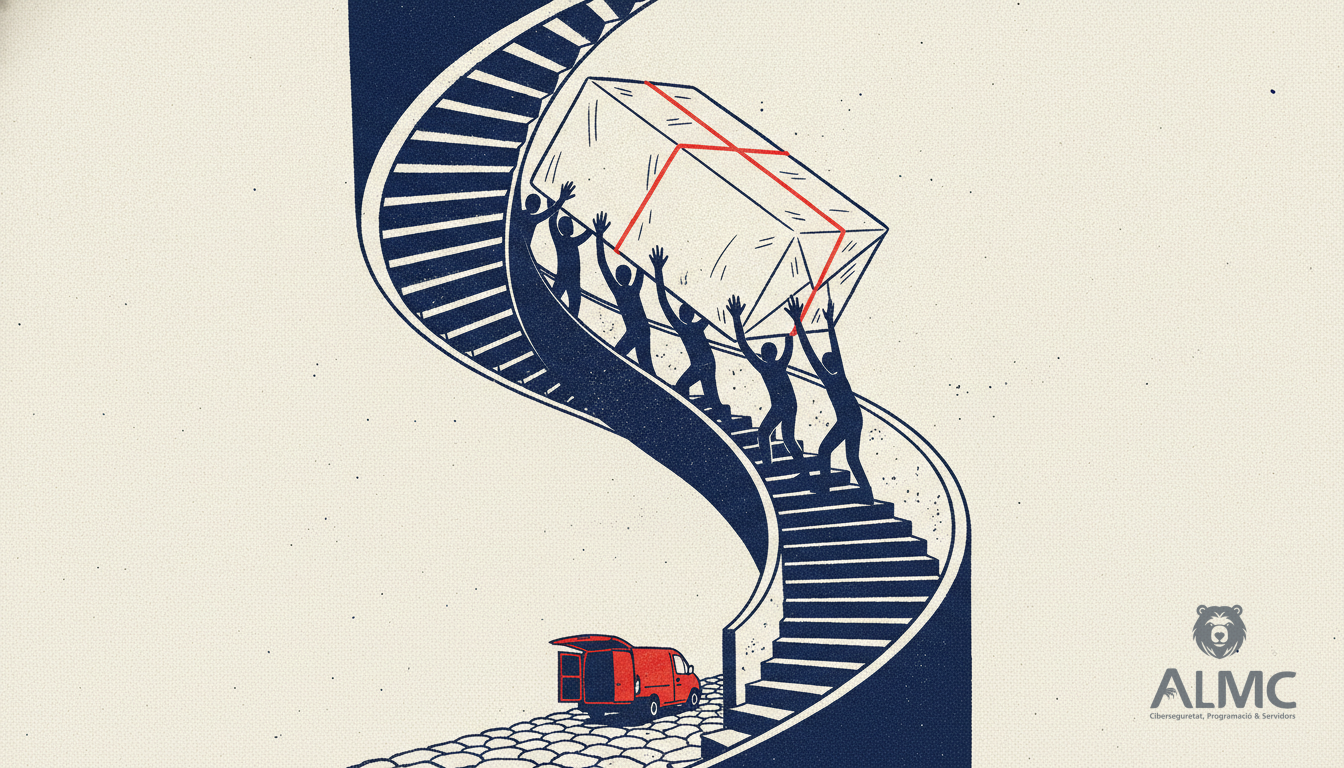
This matters most during peak trading periods. When Black Friday, Christmas and the January sales arrive in quick succession, order volumes multiply and every weak point in the operation becomes visible. The shops that come through those weeks with their reputation intact are not necessarily the fastest; they are the ones that promised something realistic and kept that promise without surprises.
What the last mile really asks of your online store
The final stretch of the journey, from the local depot to the customer's door, is where most complaints originate. It is also the part your ecommerce platform influences more than many merchants realise. A well-built store does not simply process payments: it feeds accurate data into the whole chain.
- Realistic delivery promises. Showing a delivery window that reflects actual stock, cut-off times and courier capacity prevents disappointment. A vague "3-5 days" is less useful than a date the customer can plan around.
- Clean product and address data. Weight, dimensions and validated postcodes reduce failed deliveries and unexpected surcharges, especially for bulky items that will not fit in a standard van.
- Clear communication at every stage. Order confirmations, dispatch notices and tracking updates reduce the volume of "where is my order?" enquiries, which otherwise overwhelm small teams during campaign peaks.
- Flexible delivery options. Pickup points, locker delivery and scheduled slots now influence conversion as much as price, particularly in dense urban areas.
Choosing the right foundation: PrestaShop or WooCommerce
None of the above is easy to bolt onto a generic template at the last minute. The platform you build on determines how much control you have over shipping rules, carrier integrations and the checkout flow. At ALMC.es we work with two stacks that cover most merchant needs in Spain: PrestaShop, which offers a mature ecosystem of modules for carriers, invoicing and multi-store setups, and WooCommerce, which suits brands that want their catalogue and content managed in one place while keeping full ownership of the code.
The choice is less about trends and more about your operation. A shop selling heavy furniture across the peninsula has very different requirements from a boutique shipping small parcels from Girona to France. What both need is a platform configured around their real logistics, not a default configuration that has to be patched later.
Conversion optimisation starts before the cart
Conversion is often discussed as a design problem, but in ecommerce it is frequently a logistics problem in disguise. Shoppers abandon carts when shipping costs appear too late, when delivery estimates are missing, or when the returns policy is buried. Making that information visible and honest early in the journey tends to do more for sales than another round of button-colour testing.
It also pays to think about the quieter moments. A customer who receives a proactive message about a delayed parcel is far more likely to order again than one who has to chase support. Good logistics communication is, in practice, retention marketing.
Preparing for the campaign peak without panic
The weeks before Black Friday are the right time to audit the whole chain, not the week itself. Review your carrier agreements and confirm capacity for higher volumes. Check that your stock figures synchronise correctly with the storefront. Test the checkout under load and verify that confirmation emails actually arrive. Confirm that your invoicing complies with Spanish requirements and that customer data handling meets GDPR obligations, including any courier or fulfilment partner who touches that data.
It is also worth mapping the awkward cases in advance: what happens with an oversized item, an address in a pedestrianised old town, or a customer who is never at home. Each of these has a process answer, and having it written down before the rush is what separates a calm campaign from a chaotic one.
A store built to sell, not just to exist
An online shop is only as strong as the operation behind it. That is why we approach ecommerce as a complete stack: a tailored PrestaShop or WooCommerce build, conversion-focused improvements, and the integrations that connect the storefront to carriers, stock and accounting. If your current store struggles every time volumes rise, or if you are launching in Catalonia and want a foundation that will hold up through the next campaign season, it is worth reviewing the setup before the orders arrive rather than after.
Related
- WooCommerce vs PrestaShop: Which Ecommerce Platform Wins in 2025?
- CRO for Ecommerce: Turning WooCommerce and PrestaShop Templates into Sales Engines
- Agentic Commerce: How AI Agents Are Rewriting the Rules of Online Shopping
- Desarrollo web
Put these ideas into practice
Talk to ALMC about a solution for your business. Explore your options or contact our team.