
Blog
Electronic Invoicing for the Self-Employed in Spain: 2028 Deadline
Why electronic invoicing is no longer a distant rumourFor years, self-employed professionals across Catalonia have heard that mandatory e-invoicing wa...
Why electronic invoicing is no longer a distant rumour
For years, self-employed professionals across Catalonia have heard that mandatory e-invoicing was "just around the corner". That corner now has a date on it. Under Spain's Crea y Crece law, business-to-business invoicing between companies and self-employed workers must move to a structured electronic format, and the calendar has been set in motion by the technical regulation that develops the system. For most autónomos, the obligation lands in October 2028, while larger operators face an earlier milestone in 2027.
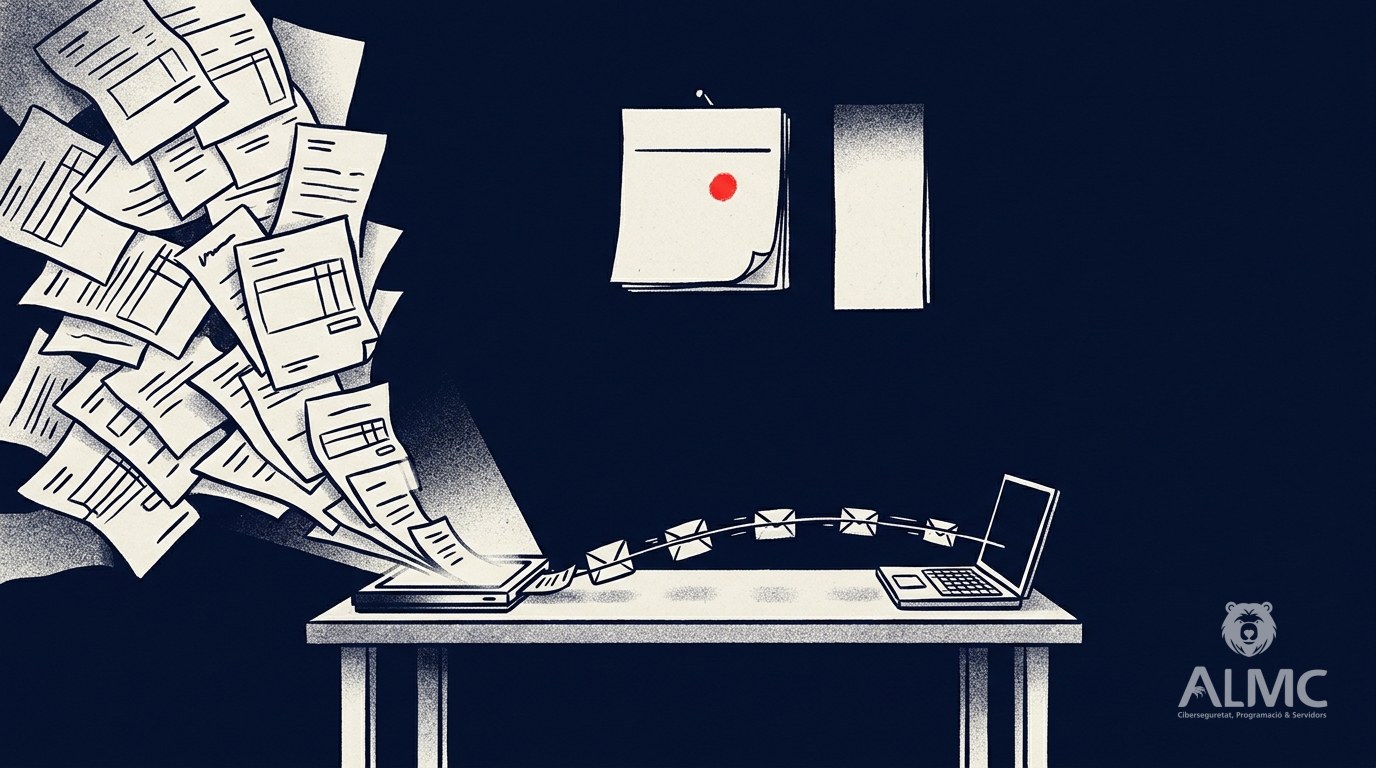
If you run a small studio in Lleida, a consultancy in Barcelona or a trade business in Tarragona, this is the moment to stop treating e-invoicing as a future problem. The transition is not simply a matter of swapping paper for a PDF.
What actually changes for a self-employed worker
The new regime does not ask you to email a scanned document. It requires invoices to be generated and transmitted in one of the structured electronic formats recognised by the law, so that the receiving system can read the data automatically. In practice, this means your invoicing tool must produce a machine-readable file, not an image or a plain document.
The scope is broader than many people assume. The obligation covers invoices you issue to professional clients and those you receive from suppliers established in Spain. It applies regardless of your tax regime, your turnover level or the size of your activity, provided the operation falls within the B2B scope.
- Included: B2B operations between autónomos and companies based in Spain.
- Excluded: invoices issued to private individuals acting as consumers.
- Excluded by default: simplified invoices, unless they qualify as "qualified" simplified invoices containing additional recipient data.
- Sector exceptions: the technical regulation allows certain activities to be excluded, temporarily or permanently, where justified difficulties exist.
One detail worth noting: being registered under the module system or having modest revenue does not exempt you. What changes with volume is the date from which the obligation applies to you.
The calendar: two dates that matter
The technical regulation came into force in 2026, but the real obligations do not start on that date. The clock begins with the approval of the ministerial order regulating the public e-invoicing solution, which sets adaptation periods of twelve months for large companies and twenty-four months for SMEs and self-employed workers.
From there, the practical timeline looks like this:
- October 2027: businesses and professionals whose turnover exceeded €8 million in the previous calendar year must issue, send and receive electronic invoices. A high-earning autónomo can fall into this group.
- October 2028: the remaining businesses and professionals, which is the reference date for the vast majority of autónomos and small companies in Catalonia.
E-invoicing is not the same as VeriFactu
These two obligations are often confused, and the confusion costs time. VeriFactu concerns the integrity of invoicing records and the prevention of software that allows manipulation; it is about how your system registers and safeguards each invoice. Mandatory B2B e-invoicing is about the format and the transmission of the invoice between the parties. A compliant business will eventually need to satisfy both, and they are best addressed together rather than as separate projects.
Where automation makes the difference
Here is the part most guides skip: complying is easy to describe and tedious to do by hand. Once invoices must be structured, sent, received and archived, the volume of repetitive tasks grows quickly. That is exactly the terrain where process automation pays for itself.
At ALMC we help small and medium businesses connect the tools they already use so that invoicing stops being a manual chore. With workflow automation built on tools such as n8n, integrations and connected applications, an invoice generated in your billing system can be validated, formatted, delivered to the recipient's platform and filed in your archive without anyone touching it. The same logic applies to incoming invoices: they are captured, read, matched against the corresponding purchase and stored where your accountant expects to find them.
The benefits go beyond compliance:
- Hours recovered every week that would otherwise go into copying data between platforms.
- Fewer errors, because information is entered once and flows onward automatically.
- Cleaner records for audits and for the traceability the regulation demands.
- GDPR-friendly handling, since client and supplier data stay within controlled, documented flows rather than scattered inboxes.
How to prepare without panic
You do not need to rebuild your entire operation overnight. A sensible sequence for a small business in Girona, Reus or the Barcelona metropolitan area looks like this:
- Map how invoices are currently created, sent and stored, including the informal steps nobody documents.
- Check whether your current billing software can already produce structured electronic invoices, or whether it will need to be replaced or complemented.
- Decide how you will receive invoices from suppliers and where they will be archived.
- Automate the repetitive links between those systems before the deadline forces you to improvise.
- Document the flow, so that a future change in the regulation does not mean starting from scratch.
The 2028 deadline is far enough away to plan calmly and close enough that postponing it will eventually cost more than acting now. Businesses that automate their invoicing early tend to discover a second benefit: the same connected workflows that keep them compliant also free up time for the work that actually generates revenue.
Related
- n8n Automation Guide: Streamline Your Business Workflows in 2026
- How Much Does Process Automation Really Cost? A 2026 Guide for SMEs
- Best WordPress SEO Plugins 2026: Expert Comparison for Spanish Sites
- Chatbot IA
Put these ideas into practice
Talk to ALMC about a solution for your business. Explore your options or contact our team.